


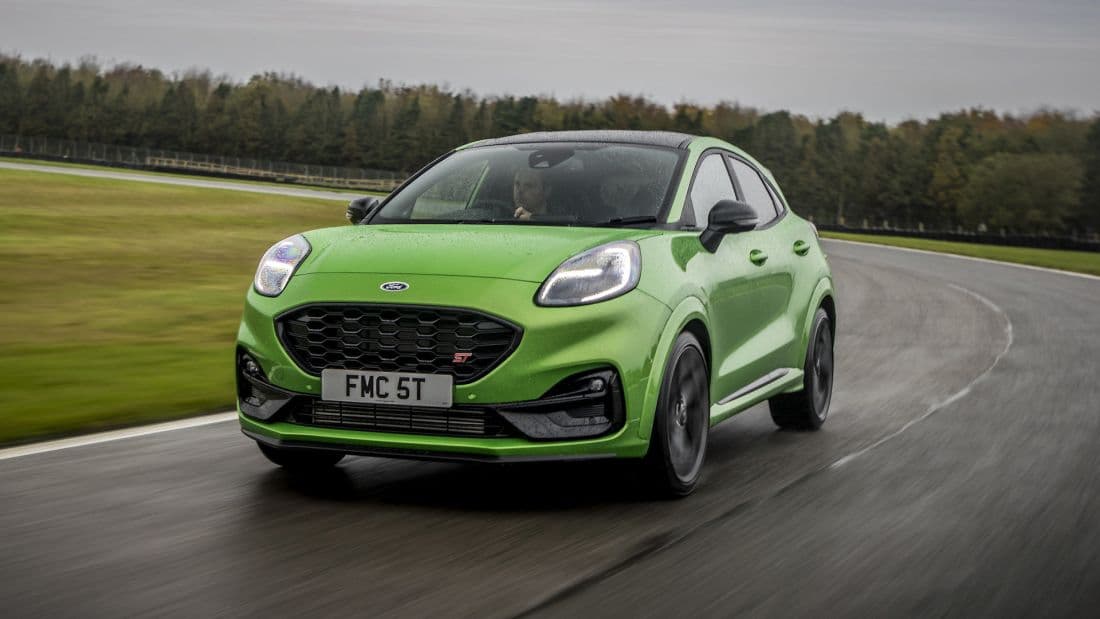

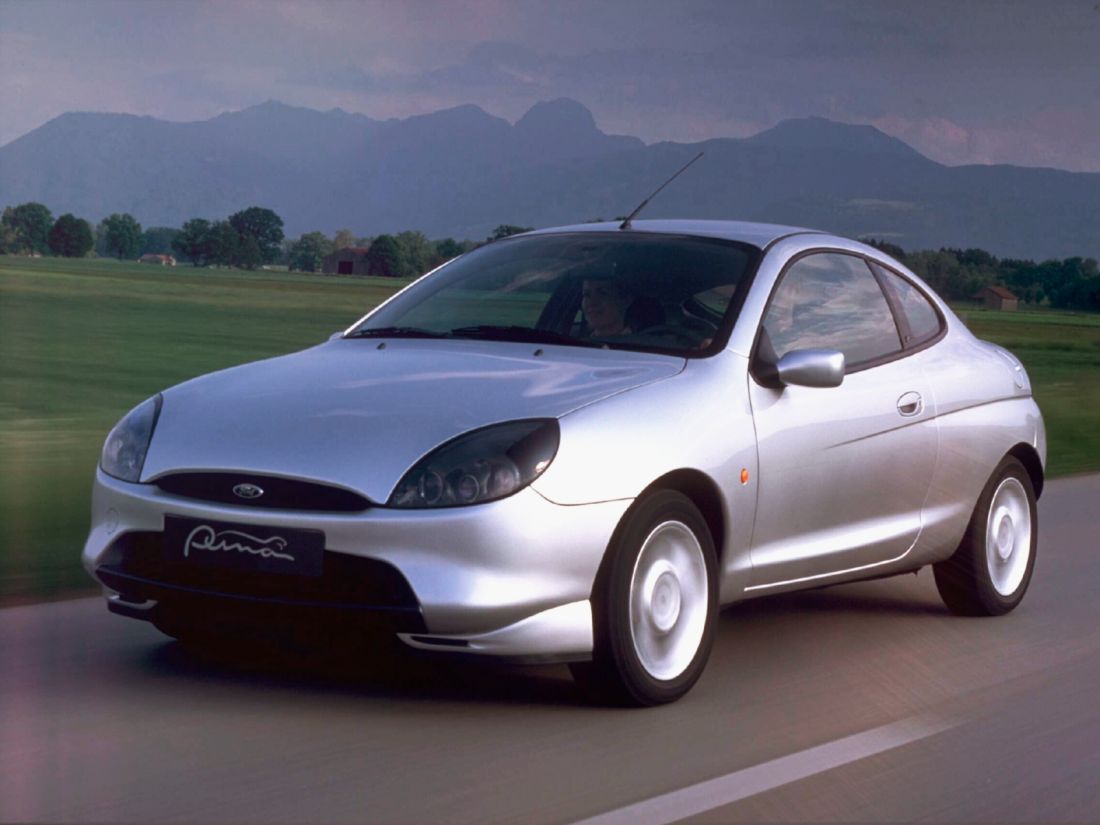
Readers of a certain age will remember the Ford Puma as a small coupé back in the 90s. But that vision is a world away from its astonishingly successful present-day incarnation as a small SUV. While naturally reminiscent of its predecessor from three decades prior, the modern Puma is sportier than most in its class—and it’s a whole lot more fun in many other ways, too.
Equipment, options and extras
The entry-level Titanium trim feels not remotely ‘entry-level’, with its 17in alloy wheels and automatic lights, wipers, aircon and heated door mirrors. Even so, you might still want to consider our favourite trim, the ST-Line, which introduces sportier styling and more supportive seats and switches out the conventional instrument dials behind the steering wheel for a 12in digital display—although you’ll have to make do with manual aircon, which blows cool or warm air on demand rather than automatically maintaining a set temperature.
Moving up through the trims, the ST-Line X brings climate control and 18in alloy for an even sportier look, along with privacy glass, part-leather seats and a fabulous B&O stereo. And the range-topping ST-Line Vignale introduces keyless entry, full leather seats (heated in the front), and a heated steering wheel—although it’s too pricey for us to recommend.
Costs, insurance groups, mpg and CO2
There’s not a weedy engine among the Ford Puma lineup, nor any especially basic trims, which explains why the car’s starting price is higher than those of its competitors the Nissan Juke and Škoda Kamiq. That being said, as a direct comparison it’s actually cheaper than both those cars, while also undercutting the equivalent VW T-Roc.
The Puma entails some attractive PCP deals by virtue of the fact it’s predicted to depreciate more slowly than most of its peers. It’s more economical as well, with its 1.0 EcoBoost mHEV 155 averaging a respectable 45mpg.
If you’re considering opting for an automatic gearbox, just remember it’ll be a little pricer to buy and run than a manual, but still more economical (and with slightly lower CO2 emissions) than the equivalent automatic Juke. The Puma pumps out less CO2 than many small SUVs, making it a relatively cheap company car, just not as cheap as an electric or hybrid alternative, like the Yaris Cross or Citroën e-C4. Bear in mind though that an electric Ford Puma is coming soon.
Safety and security
All Pumas come with lane-keeping assistance, traffic sign recognition, and automatic emergency braking with pedestrian detection, as well as no fewer than 6 airbags. On the higher trims you can add a Driver Assistance Pack, which brings blind spot monitoring, Evasive Steering Assist and Cross-Traffic Alert.
All Pumas also come with a Thatcham Category 1 alarm and immobiliser.
Reliability
All Pumas come with a 3-year, 60,000-mile warranty as standard. This can be extended to 5 years (with a 100,000-mile limit) at a premium. That’s average for a small SUV. The Puma’s rivals the KIA Stonic and Hyundai Kona come with longer warranties as standard.
The Car Planet verdict
The Ford Puma boasts nippy acceleration and agile handling, making for a relatively exciting drive for a small SUV. It also represents a sensible buy, thanks to its low CO2 emissions, superb fuel economy, smartly designed boot and appealing monthly PCP costs.
Car Planet are experts in used cars in Watford and Hertfordshire. Our virtual viewings mean you can check out a car from the comfort of your own home, or you can come in and view our cars in person. Every car goes through a thorough 150-point check to ensure it’s totally roadworthy. We’re transparent, too: we always display the details of a car’s imperfections. We care about sustainability, which is why we plant a tree for every car we sell, and we provide a 7-day money-back guarantee to any customer who isn’t absolutely satisfied with our service. With our competitive finance deals and part exchanges, you’re sure to find what you need, so check out our selection of secondhand Ford Pumas today and let’s get the ball rolling!