


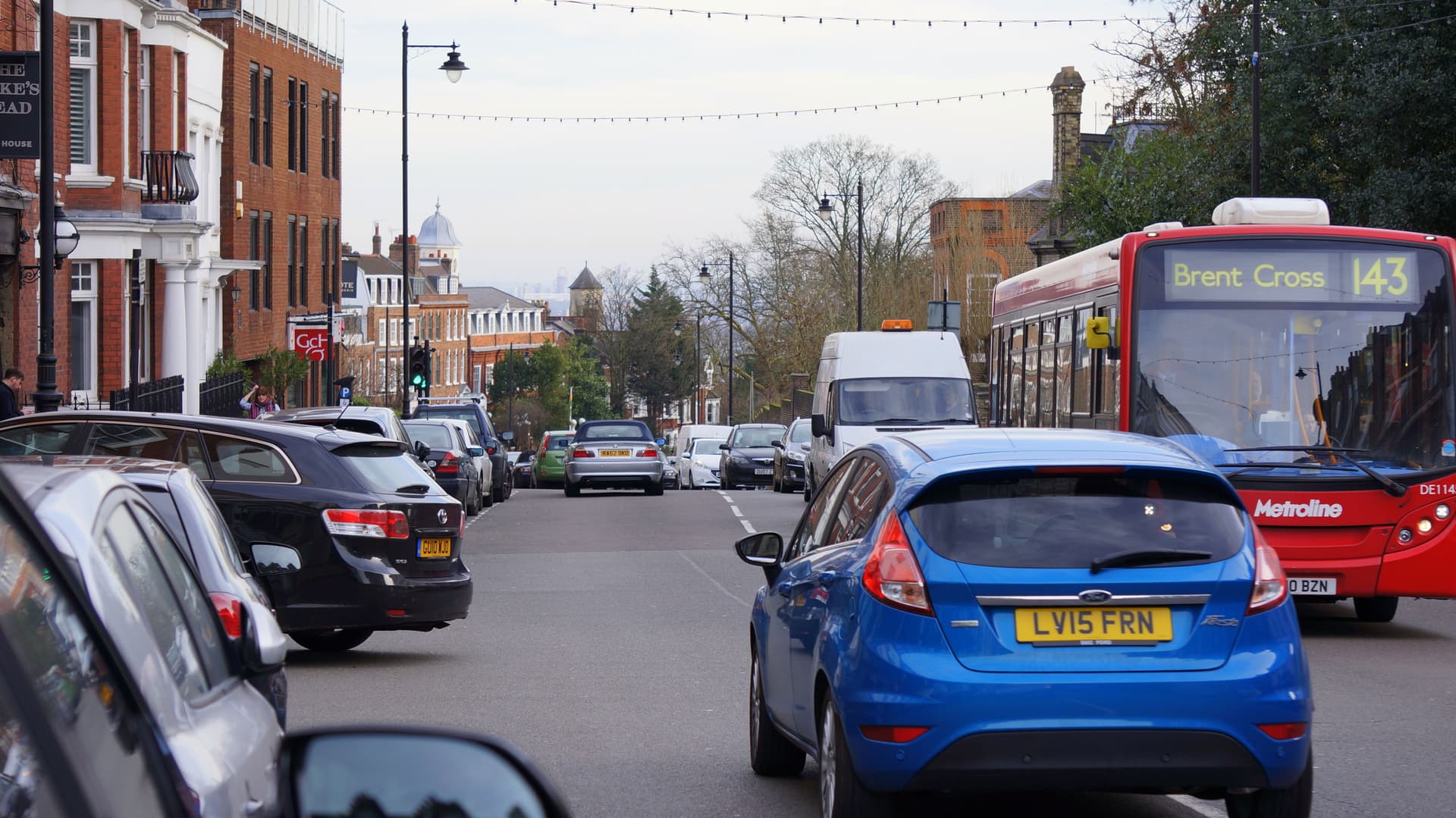
Plenty of drivers assume the Congestion Charge and ULEZ are just two names for the same London scheme. They're not, and the confusion genuinely costs people money, since it's entirely possible to owe both on the same trip. Here's exactly what the Congestion Charge actually is, what it costs right now, and how it genuinely differs from ULEZ.
Summary:
- The Congestion Charge costs £18 a day, rising to £21 if you pay late, up to three days after driving.
- It only applies Monday to Friday, 7am to 6pm, and weekends and bank holidays, 12pm to 6pm. Drive through outside those hours and nothing's charged.
- It's based on when and where you drive, not your vehicle's emissions, the opposite basis to ULEZ.
- Electric vehicles now pay too, since the full exemption ended on 25 December 2025. Auto Pay users get a 25% discount instead, working out to £13.50.
- You can genuinely owe both charges on the same day, if you drive a non-compliant vehicle into central London during Congestion Charge hours, since the zones overlap.
What Is the Congestion Charge, Exactly?
A daily fee for driving in central London during specific hours, running since 2003, making it one of the longest-standing road pricing schemes anywhere in the world, existing specifically to reduce traffic congestion rather than target vehicle emissions, the core distinction from ULEZ.
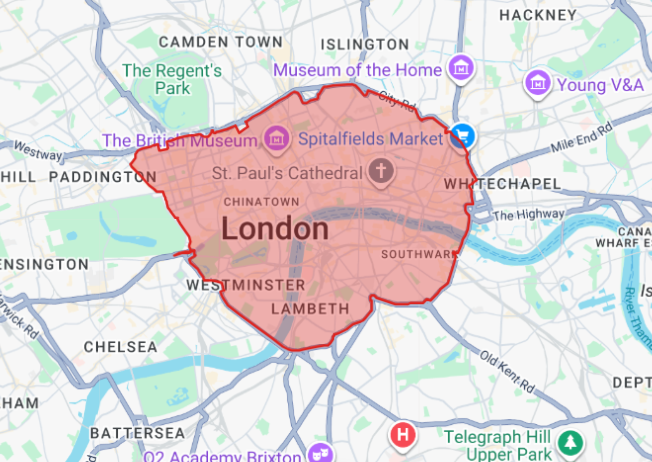
The zone itself is considerably smaller than ULEZ, covering central London specifically: roughly from King's Cross in the north down to Vauxhall in the south, and Paddington in the west across to Whitechapel in the east. Plenty of London postcodes sit well outside it entirely, and the boundary is clearly signposted on the roads themselves.
London Congestion Charge Zone Map
For the exact, up-to-date boundary, TfL publishes the official Congestion Charge zone map directly on their website, worth checking if you're planning a specific route.
There's no physical barrier or toll booth involved. Automatic Number Plate Recognition cameras around the zone's perimeter read each vehicle's plate and check it against a database to confirm whether the charge has been paid or an exemption applies.
Introduced in 2003 under then-Mayor Ken Livingstone, the scheme originally cost just £5 a day. A short-lived "Western Extension" covering Kensington, Chelsea and Earl's Court ran from 2007 to 2010 before being scrapped after local opposition, and the zone has stuck to its current boundary since.
How Much Does It Cost, and When Does It Apply?
£18 a day if you pay on time, rising to £21 if you pay late, any time up to midnight on the third day after you drove. The charge applies Monday to Friday, 7am to 6pm, and weekends and bank holidays, 12pm to 6pm. Outside those specific hours, driving through the zone costs nothing at all.
You only pay once per day regardless of how many times you drive in and out of the zone during charging hours, so there's no need to worry about repeat charges on a single day of errands.
How Is This Actually Different From ULEZ and LEZ?
Genuinely, in almost every respect between all three. ULEZ charges based on your vehicle's emissions standard, applies 24 hours a day, every day except Christmas, and covers nearly all of Greater London.
LEZ is a separate scheme again, targeting heavier vehicles specifically, lorries, buses, coaches and vans over 3.5 tonnes, meaning an ordinary car never needs to worry about it. The Congestion Charge charges based purely on when and where you drive, only during specific weekday and weekend hours, across a much smaller central area.
This means a car's ULEZ compliance has no bearing on the Congestion Charge at all. A brand new, fully compliant petrol car still pays the Congestion Charge if it enters the zone during charging hours, while an older, non-compliant car pays ULEZ regardless of what time it drives through Greater London.
| Feature | Congestion Charge | ULEZ | LEZ |
|---|---|---|---|
| Based on | When and where you drive | Your vehicle's emissions standard | Vehicle type and weight |
| Cost | £18 a day (£21 if paid late) | £12.50 a day for non-compliant cars | £100-300 a day for non-compliant heavy vehicles |
| Hours | Mon-Fri 7am-6pm, weekends/bank holidays 12pm-6pm | 24 hours a day, every day except Christmas | 24 hours a day, 365 days a year |
| Area | Central London only | Almost all of Greater London | Most of Greater London, excluding the M25 |
| Applies to ordinary cars? | Yes | Yes | No, heavy vehicles only |
| Running since | 2003 | 2019, expanded to current boundary in 2023 | 2008 |
For the full detail on ULEZ compliance specifically, including which cities beyond London run their own Clean Air Zones, see our guide on ULEZ compliant cars explained.
Can You Really Owe Both on the Same Day?
Yes, genuinely, and this is exactly where the confusion trips people up. If you drive a non-compliant vehicle into central London on a weekday afternoon, you can be charged £18 for the Congestion Charge and £12.50 for ULEZ separately, since the zones overlap in central London and the two schemes operate entirely independently of one another.
Some drivers only discover this after checking their bank statement and finding two separate Transport for London charges on the same date, understandably assuming it's a billing error, when both charges are genuinely correct and separately payable.
Who's Actually Exempt?
A specific list of vehicles don't need to pay at all, though nothing is applied automatically, you need to register the exemption with TfL yourself before entering the zone.
Emergency vehicles registered with an ambulance or fire engine tax class qualify, alongside NHS vehicles already exempt from vehicle tax. Vehicles registered with a disabled tax class, and community transport vehicles carrying multiple disabled passengers, also qualify, as do motorcycles, breakdown recovery vehicles, and cars with nine or more seats.
If you believe you qualify but haven't registered the exemption, TfL's default position is that you still owe the charge, so it's worth sorting this out before you drive rather than after.
How Do You Actually Pay It?
Online through the official TfL website, by phone, or in person at roughly 100 self-service machines dotted around car parks inside the zone, though these only take card payment, no cash.
Selected newsagents and petrol stations in the area also take payment. Regular drivers can register for Auto Pay, and you can also pay up to 90 days ahead of a planned journey if you already know your dates.
One genuine scam worth knowing about: some unofficial websites promise to pay the Congestion Charge on your behalf for a fee, without any guarantee the payment actually reaches TfL. Always pay directly through the official TfL site or an approved outlet rather than a third party you've found online.
How Can You Avoid Paying It Altogether?
The simplest way is timing. Since the charge only applies Monday to Friday 7am to 6pm, and weekends and bank holidays 12pm to 6pm, driving through the zone outside those windows costs nothing at all, including any time after 6pm on a weekday. The other straightforward option is simply routing around the zone entirely, since plenty of central London postcodes sit outside its boundary.
Do Electric Vehicles Still Get a Discount?
Partially. Full EV exemption from the Congestion Charge ended on 25 December 2025. From 2 January 2026, electric vehicles registered for Auto Pay get a 25% discount instead, working out to roughly £13.50 on the current £18 rate.
ULEZ remains a completely separate matter, electric vehicles stay fully exempt from ULEZ indefinitely, with no time limit and no reduction, since that exemption isn't affected by the Congestion Charge changes at all.
What Happens If You Don't Pay?
A Penalty Charge Notice, starting at £180, though it reduces to £90 if paid within 14 days. Paying late but within the standard three-day window at the higher £21 rate is considerably cheaper than letting it escalate to a full penalty notice, so it's worth paying promptly even if you missed the same-day deadline.
If you genuinely think a penalty's been issued unfairly, you can appeal within 28 days of the notice. Valid grounds include not being the registered keeper at the time, having already paid, a genuine exemption, the vehicle being used without your consent, or being on hire to someone else at the time.
Appeals go through the TfL website directly, or by writing to Congestion Charging, PO Box 344, Darlington, DL1 9QE.
Frequently Asked Questions
Is the Congestion Charge the same thing as ULEZ? No, they're two entirely separate schemes. The Congestion Charge is based on when and where you drive, ULEZ is based on your vehicle's emissions standard, and they operate independently of each other.
Can I be charged both ULEZ and the Congestion Charge on the same day? Yes, if you drive a non-compliant vehicle into central London during Congestion Charge hours, since the zones overlap and both schemes charge separately.
Do electric cars still avoid the Congestion Charge entirely? No, not since 25 December 2025. Electric vehicles now pay a discounted rate of around £13.50 with Auto Pay, though they remain fully exempt from ULEZ specifically.
How many times do I pay if I drive in and out of the zone multiple times in one day? Just once, regardless of how many times you enter or leave during charging hours on the same day.
What happens if I forget to pay on the day I drove? You have until midnight on the third day after driving to pay at a slightly higher £21 rate before it escalates to a Penalty Charge Notice.
Can I drive in the congestion zone after 6pm for free? Yes, on weekdays specifically. The charge only runs Monday to Friday 7am to 6pm, so driving through after 6pm costs nothing, the same applies before 7am. Weekend hours run 12pm to 6pm instead, so evenings and mornings are free then too.
What time does the Congestion Charge end? 6pm every day it operates, whether that's a weekday or a weekend or bank holiday, though the start time differs, 7am on weekdays against 12pm on weekends and bank holidays.
Can I pay the Congestion Charge in advance? Yes, up to 90 days ahead of a planned journey, either online or by phone, useful if you already know the dates you'll be driving into the zone.
How do I actually avoid paying the Congestion Charge? Either drive outside the charging hours, weekday evenings and early mornings, or weekend mornings and evenings, or plan a route that avoids the zone boundary entirely, since it only covers a relatively small part of central London.
The figures in this guide reflect the current rates and rules as of 2026, sourced from Transport for London's own published guidance. Congestion Charge rates and rules are reviewed periodically, so for the most current figures, TfL's own website remains the definitive source.
Browse our full range of used cars at Car Planet, with clear documentation and honest condition reports on every vehicle we sell.