


Introduction
Every UK number plate tells you almost exactly when a car was first registered, once you know how to read it. Here's how the current system actually works, a full table of every age identifier so far, and why a private plate can sometimes hide a car's true age from anyone who doesn't know to check.
How Do I Know What Year a Car Is From Its Registration Plate?
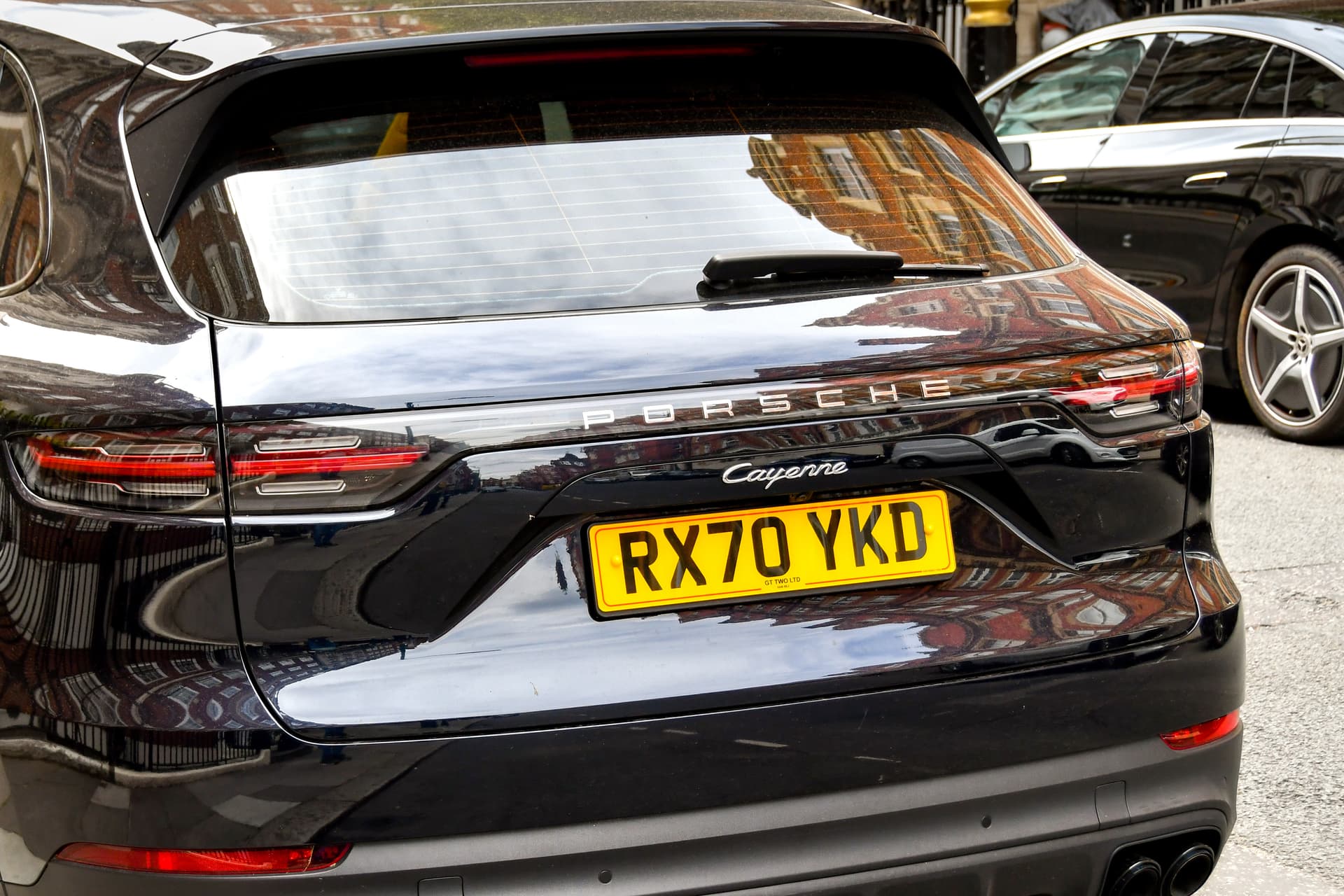
Look at the two numbers in the middle of a current UK number plate, since these directly show the registration period. For example, 26 means the car was first registered between March and August 2026, while 76 means it was first registered between September 2026 and February 2027.
The rule stays the same every year. The two digits alone therefore tell you the exact six month window a car was first put on the road.
How Does the Current Number Plate System Work?
Every current-format plate follows the same structure: two letters, two numbers, then three more letters, for example AB26 CDE.
The first two letters identify the DVLA local office where the car was registered, the first letter marking the broader region and the second narrowing it down to a specific office, carrying no practical meaning for a buyer beyond showing roughly where the car started its life.
A few real examples make this concrete. BA to BY covers Birmingham, OA to OY covers Oxford, and VA to VY covers the Severn Valley and Worcester area.
The DVLA publishes the complete list of these memory tags directly, though for a used car buyer specifically, the age identifier in the middle of the plate matters considerably more than the area code ever will.
Does a Number Plate Show When a Car Was Built, or Just Registered?
Only when it was registered, and the two dates aren't always the same. A car manufactured in late 2025, for example, might not actually reach a dealer and get registered until early 2026, meaning its plate reflects the later registration date rather than when it genuinely left the factory.
For most cars the gap is small enough not to matter, a few weeks at most. It's still worth knowing that a plate is genuinely a registration record, not a manufacturing certificate, particularly if you're comparing a car's plate age against its build date listed elsewhere in its paperwork.
The two middle digits are the part that actually matters when judging a car's age. Registrations released in March use the year directly. A car registered in March 2026 therefore carries the number 26.
Registrations released in September add 50 to the year instead. A car registered in September 2026 therefore carries the number 76. The final three letters are randomly assigned to dealers in batches and hold no meaning of their own.
Every Age Identifier Since the System Began
| Registration period | Age identifier |
|---|---|
| September 2001 to February 2002 | 51 |
| March to August 2002 | 02 |
| September 2002 to February 2003 | 52 |
| March to August 2003 | 03 |
| September 2003 to February 2004 | 53 |
| March to August 2004 | 04 |
| September 2004 to February 2005 | 54 |
| March to August 2005 | 05 |
| September 2005 to February 2006 | 55 |
| March to August 2006 | 06 |
| September 2006 to February 2007 | 56 |
| March to August 2007 | 07 |
| September 2007 to February 2008 | 57 |
| March to August 2008 | 08 |
| September 2008 to February 2009 | 58 |
| March to August 2009 | 09 |
| September 2009 to February 2010 | 59 |
| March to August 2010 | 10 |
| September 2010 to February 2011 | 60 |
| March to August 2011 | 11 |
| September 2011 to February 2012 | 61 |
| March to August 2012 | 12 |
| September 2012 to February 2013 | 62 |
| March to August 2013 | 13 |
| September 2013 to February 2014 | 63 |
| March to August 2014 | 14 |
| September 2014 to February 2015 | 64 |
| March to August 2015 | 15 |
| September 2015 to February 2016 | 65 |
| March to August 2016 | 16 |
| September 2016 to February 2017 | 66 |
| March to August 2017 | 17 |
| September 2017 to February 2018 | 67 |
| March to August 2018 | 18 |
| September 2018 to February 2019 | 68 |
| March to August 2019 | 19 |
| September 2019 to February 2020 | 69 |
| March to August 2020 | 20 |
| September 2020 to February 2021 | 70 |
| March to August 2021 | 21 |
| September 2021 to February 2022 | 71 |
| March to August 2022 | 22 |
| September 2022 to February 2023 | 72 |
| March to August 2023 | 23 |
| September 2023 to February 2024 | 73 |
| March to August 2024 | 24 |
| September 2024 to February 2025 | 74 |
| March to August 2025 | 25 |
| September 2025 to February 2026 | 75 |
| March to August 2026 | 26 |
| September 2026 to February 2027 | 76 |
The pattern is entirely predictable going forward too, each March simply uses the next year's final two digits, and each September adds 50 to that same number.
What Happened Before This System?
Two older systems came before the current one, and you'll still see both on genuinely older used cars.
The Prefix System (1983-2001)
A single letter at the very start of the plate, for example Y123 ABC, indicated the registration year. A new letter was introduced every August, running roughly A for 1983 through to Y for 2001, when the current system replaced it.
| Letter | Period |
|---|---|
| A | August 1983 - July 1984 |
| E | August 1987 - July 1988 |
| H | August 1990 - July 1991 |
| M | August 1994 - July 1995 |
| P | August 1996 - July 1997 |
| R | August 1997 - July 1998 |
| S | August 1998 - July 1999 |
| T | March 1999 - August 1999 |
| V | August 1999 - February 2000 |
| W | March 2000 - July 2000 |
| X | August 2000 - February 2001 |
| Y | March 2001 - August 2001 |
The Suffix System (1963-1983)
Before the prefix system, the identifying letter sat at the end of the plate instead, for example ABC 123Y, running from 1963 through to 1983 when the letter moved to the front of the plate for the following two decades.
| Letter | Period |
|---|---|
| A | 1963-1964 |
| F | 1967-1968 |
| J | 1970-1971 |
| N | 1974-1975 |
| S | 1977-1978 |
| T | 1978-1979 |
| W | 1980-1981 |
| Y | 1982-1983 |
Worth knowing specifically: the letter Y appears in both systems, as a suffix between 1982 and 1983, and again as a prefix in 2001 just before the current system began. Confirming which position the letter sits in on the plate, front or back, tells you immediately which era you're actually looking at.
What Is a Q Plate and Why Does It Matter?
A Q plate is issued when the DVLA can't confirm a vehicle's genuine age or original identity, commonly seen on kit cars, heavily modified vehicles, or grey imports lacking clear documentation.
A Q plate can never be transferred to another vehicle, and cars carrying one are often genuinely harder to both insure and sell since the plate itself signals unresolved questions about the car's history to anyone who recognises it.
Can a Number Plate Hide a Car's True Age?
Yes, and this matters considerably more for a used car buyer than the age identifier system itself. A dateless or transferred private plate carries no year code at all, telling you nothing about when the car was actually built or registered.
A seller can legally move a cherished plate from an older car onto a newer one, or vice versa, meaning the registration on display might have no genuine connection to the car's real age.
This works both ways too, a genuinely newer car can be made to look older, and an older car can be made to look considerably newer, purely through the plate fitted to it.
How to Check a Used Car's True Age Before Buying
Never rely on the registration plate alone when buying a used car. Treat it as a useful first impression, then confirm the genuine age properly through these checks.
- V5C logbook, confirms the car's actual date of first registration directly, the single most reliable source available.
- MOT history, freely checkable online, showing recorded mileage and test dates that should align sensibly with the car's claimed age.
- Service history, comparing recorded service dates and mileage against what the claimed age would reasonably suggest.
- Vehicle history check, flags previous write-offs, plate changes or other discrepancies a private plate alone would never reveal.
- Registration plate, genuinely useful as a quick reference point, though never definitive proof on its own.
Running all five together, rather than trusting any single one, is what actually protects you. A private or dateless plate specifically is the one detail most likely to disguise a car's true age, since it displays no year code at all and can be legally transferred between vehicles regardless of their genuine build or registration dates.
Can You Find a Car Owner's Details From Their Registration Number?
Yes, though only with genuine reasonable cause, not simply out of curiosity. The DVLA will consider a request if you're trying to trace the keeper of an abandoned vehicle, locate the owner of a car parked on private land, identify someone involved in an accident, issue a parking or trespass notice, or report suspected insurance fraud.
To make a request, complete form V888, available from a Post Office or directly through GOV.UK, explaining your reason clearly alongside the vehicle's make, model and registration. A £2.50 fee applies, payable by cheque or postal order to DVLA Swansea, with the completed form sent to Vehicle Record Enquiries, DVLA, Swansea, SA99 1AJ.
What Are the Legal Rules for UK Number Plates?
A genuine set of legal requirements applies to every plate on the road. Plates must be made from reflective material, use the standard approved font, and be marked with both a British Standard number and the details of the supplier who made them.
Colour rules are fixed too, black characters on a white background at the front, black characters on a yellow background at the rear. Certain flags, including the Union Jack, can be displayed alongside the plate.
A longer list of things aren't allowed. Glittery or frosted letters, carbon-style detailing, neon colours, rearranged spacing between characters, and patterned backgrounds are all against the rules, alongside letting a plate get so dirty it becomes hard to read.
One rule worth knowing specifically as a buyer: it's genuinely illegal to fit a private plate carrying a more recent age identifier than the car's actual registration date, precisely to stop a plate being used to make a car look newer than it is.
What Size Does a UK Number Plate Need to Be?
Legal sizing depends on when the car was registered. Cars registered between January 1973 and September 2001 need characters 89mm in height. Cars registered outside that window need characters 79mm in height, with 11mm of spacing between each character and 33mm of spacing between the age identifier and the final three letters.
The standard plate itself measures 520mm by 111mm for a full seven-character registration, though shorter plates are permitted for registrations with fewer digits, provided the same spacing rules are followed throughout.
Frequently Asked Questions
What do the letters and numbers on a UK registration plate mean?
A current-format plate breaks into three parts. The first two letters show the DVLA local office where the car was registered. The two middle digits are the age identifier, revealing the six month period the car was first registered in. The final three letters are randomly assigned and carry no meaning of their own.
How can I quickly work out a car's age from its plate?
Look at the two middle digits. If the number is 50 or below, the car was registered in March of that year. If it's above 50, subtract 50 to find the year, and the car was registered in September.
Does the area code on a plate affect a car's value?
No, the regional letters have no bearing on value or condition, they simply show where the car was originally registered.
What happens when the current system runs out in 2051?
The DVLA is expected to review and introduce a new format at that point, though no official details have been confirmed this far in advance.
Can I tell a car's exact registration date from its plate alone?
Only to within a six month window. For the precise date, check the V5C document or run an official history check.
Why do some older cars have a single letter instead of numbers?
They're registered under the prefix or suffix systems used before September 2001, both explained in full above.
What year is a Y registration?
It depends on where the letter sits. A Y suffix, at the end of the plate, means 1982 to 1983. A Y prefix, at the start of the plate, means March to August 2001, the final release before the current system began.
Conclusion
Once you know where to look, a number plate tells you almost everything about a car's age in seconds, which system it belongs to, which six month window it was registered in, and whether the story it's telling actually adds up. That last part matters most.
The plate is a genuinely useful first glance, though never designed to be the final word since a private or transferred registration can quietly say something different to what the car's paperwork actually confirms. Treat the plate as your starting point. Verify it against the V5C and a genuine history check, then you'll always know exactly what you're looking at, not just what it appears to be.
Every car sold through Car Planet comes with clear documentation confirming its genuine registration date. You always know exactly how old a car really is, plate aside.