


Introduction
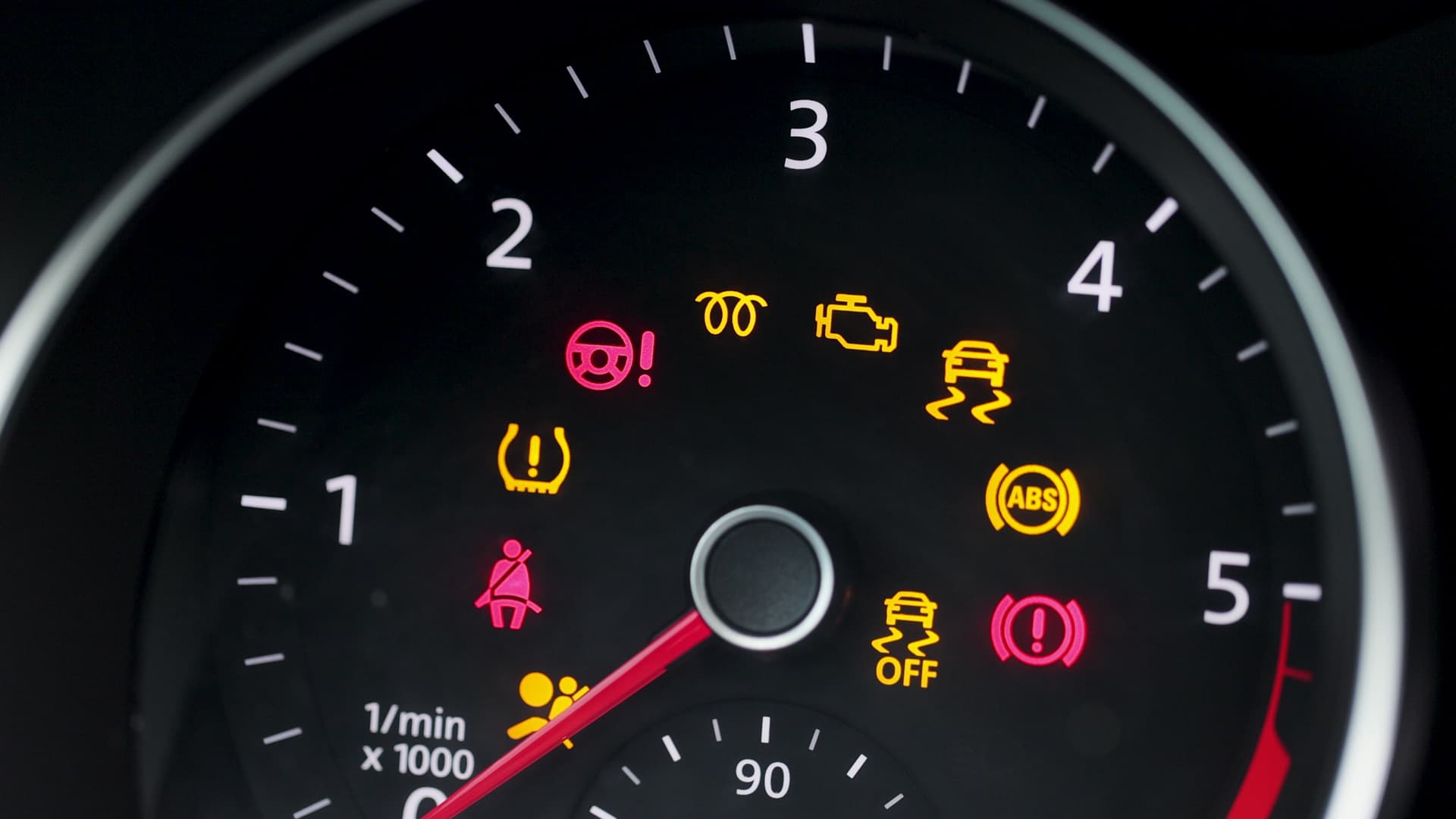
Every dashboard warning light follows the same basic colour logic once you know it. Understanding that logic is the difference between calmly pulling over for a check and a genuinely expensive mistake.
This guide covers what the most common petrol and diesel warning lights actually mean, the everyday informational symbols you'll see alongside them, the newer driver assistance lights fitted to most modern cars, and a dedicated section on electric vehicle specific warnings.
We'll also cover when a light genuinely means stop the car, when it means book a check soon, and when a light on your dashboard becomes an MOT failure in its own right.
Summary:
- Red means stop as soon as it's safely possible. These lights signal a genuine, immediate risk to the car or your safety.
- Amber or orange means book a check soon. The car is usually still safe to drive carefully, though shouldn't be ignored.
- Green or blue is purely informational, confirming a system is switched on and working, nothing more.
- A flashing light is generally more urgent than a solid one, even within the same colour, since it often indicates an active, worsening fault rather than a stored one.
- Certain illuminated warning lights cause an automatic MOT failure, regardless of how the car otherwise drives.
What Do the Colours on Your Dashboard Actually Mean?
Every warning light system follows the same three-colour logic, effectively a traffic light for your car. Red signals a serious, often safety-critical issue, meaning you should find somewhere safe to stop rather than continuing to drive.
Amber or orange signals a fault worth booking in soon, one that usually still allows careful driving in the meantime, though ignoring it risks the problem escalating into something considerably more expensive.
Green and blue lights carry no warning at all. They simply confirm a feature you've switched on, headlights, indicators, cruise control, is currently active and working as intended.
When Should You Genuinely Worry, and When Can You Relax?
Worry, and act immediately, when any of these appear while driving: oil pressure, coolant temperature, brake system, or a flashing engine management light. Each of these carries a real risk of serious mechanical damage or a genuine safety failure within a short distance, and none are worth pushing through to reach your destination first.
You can relax, at least enough to drive carefully to a garage rather than stopping immediately, when you see a solid amber engine management light with no loss of power, a tyre pressure warning, or an ABS light with your normal brakes still working properly, all genuinely needing attention though rarely within the next few minutes.
Two lights sit somewhere in between and deserve a moment's thought rather than either extreme. A battery warning light means the car is currently running on stored charge alone, worth heading straight to a safe stop rather than continuing your journey, even though nothing dramatic happens immediately.
A DPF warning on a diesel, meanwhile, often clears itself with a sustained faster drive, genuinely fine to attempt once, though a light that returns quickly points to something a garage needs to look at properly.
Why Do All the Lights Come On When You Start the Car?
This is completely normal and expected. Every warning light briefly illuminates together the moment you turn the ignition on, part of the car's own self-check routine confirming each system and bulb is functioning. Within a few seconds, every light relating to a genuinely working system should switch off on its own.
If a specific light stays illuminated after this initial check, that's the car telling you something specific needs attention, not a fault with the check itself.
The Most Common Red Warning Lights
Oil Pressure Warning
Usually shown as a dripping oil can, this is one of the most serious lights you can see, meaning the engine's oil pressure has dropped dangerously low. Continuing to drive risks genuine, potentially catastrophic engine damage within a very short distance.
Stop safely as soon as possible, switch the engine off, and check the oil level before considering whether it's safe to continue at all.
Coolant Temperature Warning
Signals the engine is running hotter than it safely should. Continuing to drive risks warping the cylinder head or causing more serious internal damage. Stopping to let the engine cool, rather than pushing on to your destination, genuinely protects the car.
Transmission Temperature Warning
Signals the automatic gearbox fluid is running hotter than it should, common under heavy towing or extended stop-start driving in hot weather. Continuing to drive risks genuine internal gearbox damage. Easing off, and stopping if the light doesn't clear, protects an expensive component from a much costlier repair.
Brake System Warning
Can indicate anything from low brake fluid to a genuine fault within the braking system itself. Given how directly this affects your ability to stop safely, treat this light as requiring immediate attention rather than something to monitor.
Power Steering Warning
Signals a fault within the steering system itself, commonly a fluid leak on older hydraulic systems or an electrical fault on newer electric power steering. Losing power assistance suddenly makes the steering considerably heavier, genuinely affecting your ability to control the car safely, worth treating with the same urgency as a brake warning rather than continuing on regardless.
Battery and Charging Warning
Indicates the battery isn't being charged properly while the engine runs, often pointing to a failing alternator. The car may continue running briefly on remaining battery charge, though will eventually lose power entirely, sometimes without much warning once the charge runs out.
Airbag Warning
Signals a fault within the airbag or seatbelt pretensioner system, unlikely to affect how the car drives day to day though genuinely compromising your safety in the event of a collision, making it worth addressing properly rather than living with indefinitely.
The Most Common Amber Warning Lights
Engine Management Light
Also called the check engine light, this covers an enormously wide range of possible faults, from a minor sensor issue through to a genuinely serious mechanical or emissions problem. A solid amber light usually allows careful driving to a garage.
A flashing engine management light specifically often indicates an active misfire, and continuing to drive with it flashing risks damaging the catalytic converter, worth stopping for rather than pushing on.
ABS Warning
Means the anti-lock braking system specifically has a fault, though your normal brakes should still work. You lose the anti-lock function in an emergency stop until it's fixed, worth getting checked promptly rather than driving indefinitely without it.
Tyre Pressure Warning
Indicates one or more tyres has fallen below the correct pressure. Check all four tyres properly rather than assuming which one triggered it, since underinflated tyres genuinely affect handling, fuel economy and tyre wear.
Diesel Particulate Filter Warning
Common on diesel cars specifically, this signals the filter has become partially blocked. A sustained higher-speed drive can sometimes clear a mild blockage on its own, though a persistent light suggests a garage visit is genuinely needed.
Traction Control and Stability Control Warning
Usually flashes briefly and normally on slippery or wet roads, confirming the system is actively working to keep the car stable. If it stays lit on a normal, dry road instead, that points to a genuine fault within the system itself, worth having checked promptly since it directly affects how the car handles in an emergency.
Driver Assistance Warning Lights
Modern cars carry a genuinely new category of warning light, showing when a driver assistance feature has switched itself off rather than a mechanical fault existing. Automatic emergency braking disabled, automatic emergency steering disabled, lane-keep assist off, and traffic-sign recognition system disabled all fall into this group.
These typically appear when a camera or sensor is temporarily obstructed, by dirt, heavy rain, or glare, rather than a genuine hardware failure. The car remains completely safe to drive in the meantime, simply without that specific assistance feature active.
If the warning persists once conditions clear and the sensor's genuinely clean, it's worth having checked since a sensor fault stopping these features working when you do need them defeats their purpose entirely.
Everyday Informational and Reminder Lights
A large group of dashboard lights aren't warnings at all, simply confirming something is switched on or reminding you of routine housekeeping. Headlights, front fog lights, and the high-beam indicator all confirm exactly what they say, a specific lighting function currently active. The automatic high-beam indicator confirms the car itself is controlling when high beam switches on and off.
Washer fluid, door open, and low fuel work the same way, straightforward reminders rather than faults. Automatic stop-start active simply confirms the engine has paused itself at a standstill to save fuel, switching back on the moment you release the brake.
The seatbelt indicator and lamp out warning deserve slightly more attention though, the former a genuine safety reminder, the latter flagging an actual bulb failure worth fixing promptly given the legal requirement to have working lights.
A freezing temperatures or icy roads warning is purely informational too, based on the car's own temperature sensor, though genuinely worth heeding as a practical caution rather than ignoring as background noise. A cruise control issue light means the system itself has detected a fault and disabled itself, safe to continue driving normally without it active.
Security and Specialist Warning Lights
An immobilizer warning typically flashes when the car's security system hasn't recognised the key being used, sometimes resolved simply by trying a spare key or having the original reprogrammed.
A rev-match system issue, seen mainly on performance-oriented cars with an automatic throttle-blip feature for smoother downshifts, indicates that specific feature has faulted without affecting the car's basic ability to drive safely.
Electric Vehicle Warning Lights and Symbols
Electric cars share some warning lights with petrol and diesel models, brakes, tyres, and a separate 12 volt battery warning all still apply, though carrying a genuinely distinct set of symbols alongside them too.
Ready Indicator
A green light or "READY" text confirming the high-voltage system is live and the car will move the moment you select drive or reverse, effectively replacing the sound of a conventional engine starting since an EV gives no audible cue otherwise.
Vehicle Connected to Charging Cable
Appears if you attempt to start the car while still plugged in, a genuine safety feature rather than a fault. The car simply won't move until the cable's fully disconnected.
High Voltage System Warning
Shown as a car outline with an exclamation mark or lightning bolt, this is one EV warning genuinely worth stopping for immediately if it appears in red, indicating a serious fault within the high-voltage system itself. Continuing to drive risks further damage, and this is specifically a fault requiring an EV-qualified technician rather than a general mechanic.
Reduced Power or Limited Power Mode
Often shown as a turtle icon despite the character, this amber warning means the car has deliberately limited its own performance to protect the battery or motor, commonly triggered by a very low battery, an electrical fault, or extreme temperature affecting battery performance. Reduce speed and get the car checked promptly rather than continuing to push it.
Regenerative Braking Warning
Usually shown with the letters RBS in a circle, amber if performance is genuinely reduced, red if the fault's more serious. Since regenerative braking handles a meaningful share of an EV's everyday slowing down, a fault here changes how the car actually decelerates, worth getting checked rather than adjusting to and ignoring.
Low Battery Warning
A charging station icon, typically appearing around 10 percent remaining charge and flashing once it drops to around 5 percent, giving genuine advance warning to find a charger rather than risk running out with no power at all.
Does a Warning Light Affect Your MOT?
Yes, directly. Certain illuminated warning lights cause an automatic MOT failure regardless of how well the car otherwise drives, the airbag warning light and a malfunctioning ABS warning light being two of the clearest examples.
For the full detail on what testers actually check and how the pass or fail categories work, see our guide on the MOT test explained.
This is exactly why an illuminated warning light on a used car you're viewing deserves a direct question, not a guess. If a seller can't clearly explain why a light is on, treat it as a genuine unresolved issue rather than something to assume away.
What Should You Note When a Warning Light Appears?
Recording the conditions helps considerably if you need a garage to diagnose an intermittent fault. Note your speed and the weather at the time, whether the light was solid or flashing, and anything unusual you noticed alongside it, an odd noise, a smell, or a change in how the car handled.
Recent fuel fills, services or repairs are worth noting too, since a fault appearing shortly after any of these often points a mechanic toward the genuine cause considerably faster than the warning light alone would.
Frequently Asked Questions
What is the most serious warning light in a car?
The oil pressure warning light is generally considered the single most urgent, since continuing to drive with genuine oil pressure loss risks catastrophic engine damage within a very short distance.
The engine management light, when flashing, and the brake system warning are considered similarly serious, since all three point toward damage or a safety risk that worsens the longer you keep driving.
What does it mean when my car dashboard warning lights are orange?
Orange, also called amber, sits between green and red in urgency, meaning a fault exists that genuinely needs checking without requiring you to pull over immediately the way a red light does. Careful driving to a garage is usually fine, though the specific light still determines exactly how soon that visit should happen.
Can I keep driving with an amber warning light on?
Generally yes, for a short distance to a garage, though it's worth avoiding harsh acceleration or long motorway stints until the specific fault has been identified.
Is it ever safe to drive with a red warning light on?
Not as routine driving. A red light means finding somewhere safe to stop as soon as possible, then assessing whether continuing even a short distance is genuinely safe.
Why does my warning light keep coming on and off?
An intermittent light often points to a loose connection, a failing sensor, or a fault that only occurs under specific conditions, exactly why noting the conditions when it appears helps a mechanic diagnose it properly.
Do all cars use the same warning light symbols?
Mostly, since core symbols like the engine outline and battery shape are broadly standardised, though some manufacturers use their own variations or combine several warnings into a single master alert. Checking your specific owner's handbook confirms exactly what a given symbol means on your car.
Will a warning light always trigger an MOT failure?
No, only specific ones, airbag and ABS warnings being the clearest examples. Many other warning lights don't automatically fail an MOT on their own, though the underlying fault they're flagging still needs addressing.
Conclusion
Dashboard warning lights look genuinely overwhelming until you realise almost every one of them, whether it's a decades-old oil pressure symbol or a brand new lane-keep assist alert, follows the exact same colour logic underneath.
Red means stop and assess. Amber means book it in soon. Green and blue simply confirm something's working. That single rule covers the vast majority of what your car will ever tell you, EV or otherwise, genuinely worth more than memorising every individual symbol.
Every car sold through Car Planet is checked thoroughly before it's ever listed. You never need to guess what an unexplained warning light might mean.